


tradional clown make up
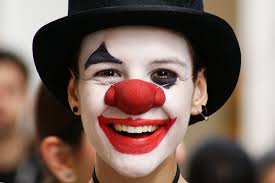
lips only painted in the middle creates small fun looking lips

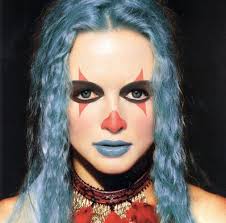

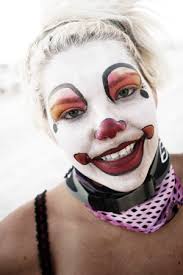


overall colure on face instead of plain white

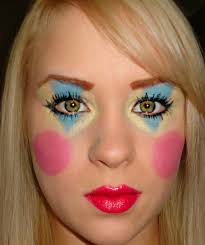
pink circles on cheecks creates cheekyness
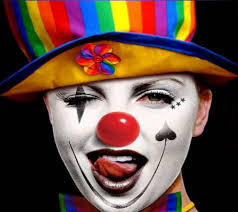
i like the patterns on the face the patterns you find on cards like the hearts,
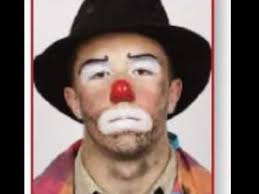

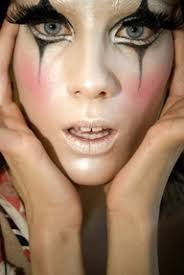
under eyes


,,<< ddiamond over eyes

different effects to show gender


high eye brows


,, shapes over eyes


overly large lips


red lips


ever put on nose or painted on


patterns over eyes
all colores used for clowns make up and clothing are userly primary colures reds, yellows, blues est
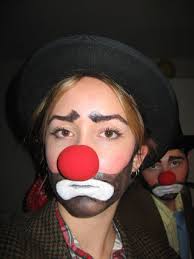


the tamp clown is quit sad so tire drops painted on
#

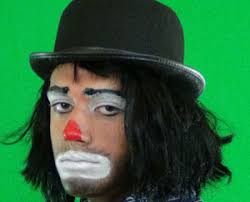

he is poor and a trap so a dark chin for a stubaly beard
make up used for clowns make up




uneak ideas ^^^^^ under modern clown make up research
history of clown make up
Clowns are comic performers stereotypically characterized by the grotesque image of the circus clown's colored wigs, stylistic makeup, outlandish costumes, unusually large footwear, and red nose, which evolved to project their actions to large audiences.
 North American

north american
The most prevalent character clown in the American circus is the hobo, tramp or bum clown. There are subtle differences in the American character clown types. The primary differences among these clown types is attitude. According to American circus expert Hovey Burgess, they are (in order of class):
- The Hobo: Migratory and finds work where he travels. Down on his luck but maintains a positive attitude.
- The Tramp: Migratory and does not work where he travels. Down on his luck and depressed about his situation.
- The Bum: Non-migratory and non-working.
Skills
In the circus, a clown might perform another circus role:
- Walk a tightrope, a highwire, a slack rope or a piece of rope on the ground.
- Ride a horse, a zebra, a donkey, an elephant or even an ostrich.
- Substitute himself in the role of "lion tamer".
- Act as "emcee", from M.C. or Master of Ceremonies, the preferred term for a clown taking on the role of "Ringmaster".
- "Sit in" with the orchestra, perhaps in a "pin spot" in the center ring, or from a seat in the audience.
- Anything any other circus performer might do. It is not uncommon for an acrobat, a horse-back rider or a lion tamer to secretly stand in for the clown, the "switch" taking place in a brief moment offstage.
different types of clowns
Whiteface
Clowns
There are three types of
Whiteface Clowns: Straight Whiteface, (classic) European Whiteface, and (comedy)
grotesque Whiteface |
|
 |
(Classic) European Whiteface |
 |
|
|
Character: Also
commonly called the Pierott clown. An elegant clown, artistic, colorful, bright
and cheery. Its performance is highly artistic and skillful, but done with a
comedic or dramatic flair. |
|
|
Makeup: All exposed
flesh will be covered with white makeup. Minimal lining color(s) and/or glitter
will be used to express the features of the eyes, nose, and mouth. A white skull
cap could be worn in lieu of a colored wig. The European Whiteface generally
does not wear a comedy nose, false eyelashes, or large ears. |
|
|
Costume: Considered
the "most beautiful" of all clowns, it would be outfitted with the traditional
one or two-piece jump suits of white or colored material to fit the character of
the Classic Pierott. The styles may vary but are generally roomy and well-fitted
and may have a detachable collar. The tunic or blouse can be straight, flared,
short, medium or long with the long sleeves. Buttons, pompons, piping and
ruffles should be of a contrasting color. The pants can be straight, flared,
ruffled, or pantalooned. A clown hat should fit the clown's
character/personality (short or tall cone hat, short cup or flat hats, or the
typical "Pagliacci" hat). Gloves should cover the hands and wrists and should be
white or colored to fit the wardrobe. Ballet or dancing slippers would be worn
in lieu of large comedy shoes.
| Tramp/Hobo |
 |
|
Character: There are some
variations in this clown category. The classic Tramp epitomized by Emmett Kelly
and Otto Griebling of circus fame is the forlorn and downtrodden character who
has nothing and knows he will never have anything. By nature, he will probably
be a loner, which is reflected in his determination to be silent, generally not
talking to anyone but his peers. His downcast mannerisms and shuffling
burdensome movements reflect his hard life.
The vagabond, elegant or
happy Tramp is the businessman, scholar or playboy who, being fed up with his
life, walked out of society for the wanderlust of travel. He is king of the
road, happy with what he has and does not expect much. His character may take on
some of the characteristics of the Auguste. This type of character was portrayed
by Red Skelton in his Freddie the Freeloader character. Considered the only true
American clown, some believe that this character developed from the days of the
Depression in the 30's, when men rode the rails looking for work. Other
historical references indicate the tramp makeup goes back to vaudeville and
minstrel shows of the 1800's and early 1900's. Regardless of the type of
Tramp/Hobo, he is the one who is the brunt of the joke and will be on the
receiving end of the pie, slap or kick from the Whiteface or Auguste. Both
variations of tramps will be judged together. In addition, the "bag lady" would
be considered the female version of a Tramp/Hobo. |
|
Makeup: The makeup
represents the soot deposited on the face from the coal and wood-burning trains
their originators rode. The eye and mouth areas were wiped clean of soot in
order to see and eat. White makeup is used in the eye and mouth areas to
exaggerate this cleaning process. The upper face is a blend of flesh tones to
reflect the outdoor look. The beard line of the male is black or shades of dark
gray to reflect the soot and beard, feathered into the upper cheeks and down
under the chin. A ruddy nose is used. A little red shading in the cheeks can
help create the sunburned look. The difference between the types of tramp
characters is generally depicted by the shape of the eyebrows and mouth, either
up or down to reflect happy or sad. |
|
Costume: Usually a
dark suit, tuxedo, tail or just shirt and pants made to look old and worn for
the male, and an old worn-out dress and/or coat for the bag lady. These could be
well patched with rags or other materials, with uneven stitching or held
together with whatever available. A dark, battered hat, tattered shoes and
socks, worn shirt and tie will exaggerate the character. Gloves are generally
old and worn. In keeping with the unemployed status of the Tramp, this character
would not wear expensive watches, rings, or new belt, shoes, or
socks.
| Character
Clowns |
|
|
A Character Clown is one who portrays
an identifiable character and/or occupation, i.e., fireman, nurse, doctor,
cowboy, storybook character, policeman, sailor, small child, etc. Contestants
must remember that this is a clown competition; famous personalities, i.e.,
Charlie Chaplin, W. C. Fields, Col. Sanders, etc., are not considered "clowns".
Representations of animals or cartoon characters, i.e., dogs, cats, Smurfs,
etc., are also not considered character clowns. On the other hand, a contestant
who portrays a clown version of a famous personality, i.e., Charlie Chaplin,
would be considered a character clown.
Rules regarding costumes would not necessarily be
used in judging this category. Judges will grade the contestant on how well the
costume helps to identify the character. When judging this category the judges
will be evaluating the contestants' makeup according to the appropriate makeup
guidelines. |
|
|
| Auguste |
 |
|
Character: The most comical of
all clowns. He/she is impish, gregarious and thrives on slapstick. His/her
actions are big, clumsy and awkward. He/she does not have much in common with
the Whiteface except for the makeup and costume. His/her personality is that of
a rabble rouser. When appearing with the Whiteface, the Auguste (German meaning
"foolish") is the brunt of the joke. However, with the Tramp, he becomes the
instigator in control of the situation. |
|
Makeup: The Auguste
has a highly colorful makeup with a base color of flesh tone (pink, tan, reddish
brown) on the face and neck. The eye and muzzle area are usually covered in
white to produce a wide-eyed expression and to accentuate the mouth design.
Designs in and around the eyes and mouth are generally black or red, but other
lining colors, in moderation, are acceptable. A red shadowing around the muzzle
area is generally outlined in black (or occasionally red). This clown will
normally wear a large comedy nose appropriate to the size of the clown's face.
The Auguste will always wear a wig, but can choose from the many varied styles
and colors to accentuate the costume and flesh tone of the
Auguste. |
|
Costume: The Auguste
clown has the widest variety of costume designs to choose from, except it would
not wear the "traditional" jumpsuit of the Whiteface. The August could wear a
jacket or coat, short, medium or long, with or without tails, or go without. The
pants could be short, long, or oversize. It can choose from a wide selection of
colorful plaids, stripes, polka dots, and checks, as well as solid colors.
Commonly called "the tailor's nightmare", the Auguste's costume colors and
patterns should complement the overall clown appearance, whether or not they are
color coordinated or matched. Theatrical fabrics or sequins are inappropriate on
the Auguste costume. He/she is usually a notorious prankster and may need a lot
of pockets to carry gags and tricks. The costume can be complemented with
outlandish accessories, like large or small ties, vests, colorful socks, large
or comical collars, suspenders and many styles and colors of comedy clown shoes.
These and one of the many hat possibilities, like skimmers, Irish derbies,
bowlers, top hats, stovepipes, "madhatters" and "crushables" in various bright
colors will enhance the Auguste clown character. White or colored gloves are
also worn. Although the Classic European Auguste is used in skits, it is not
appropriate for COAI competitions. Costuming does not vary much between the
Auguste and the Whiteface female clown regarding style, but the Whiteface
tradition of color coordination, sparkles, glitter, ruffles and ribbon remain.
Even when using cotton fabrics, the total look would be pretty and elegant. The
Auguste female clown may wear mismatched colors and be totally uncoordinated,
but may also prefer to be a pretty clown. This is acceptable. However, the
Auguste must never wear sequins and glitter or use theatrical fabrics. These
belong only to the Whiteface beauties. The female Auguste may choose to be a
bumbling, stumbling or slapstick personality, much the same as the male Auguste
clown. |


